The discovery of groundwater resources
Water is the most precious wealth available to mankind, especially in our country where a large area of it is covered by dry and desert areas. Due to the dry and fragile climate of the country in some provinces and considering Taking the recent droughts, the importance of water as a vital principle becomes more clear. Water is one of the fundamental factors of production in the agricultural sector, which with the continuation of years of drought and the continuation of the harvest of this valuable commodity in Iran, farmers are faced with challenges. has faced serious efforts to achieve this vital substance. Therefore, the increasing need for underground water for life and environment led to the presentation of techniques to improve exploration and forced to carry out geophysical studies to explore underground water sources and They have determined the best place to dig a well.
Factors Affecting the Success of Groundwater Exploration by Geophysics
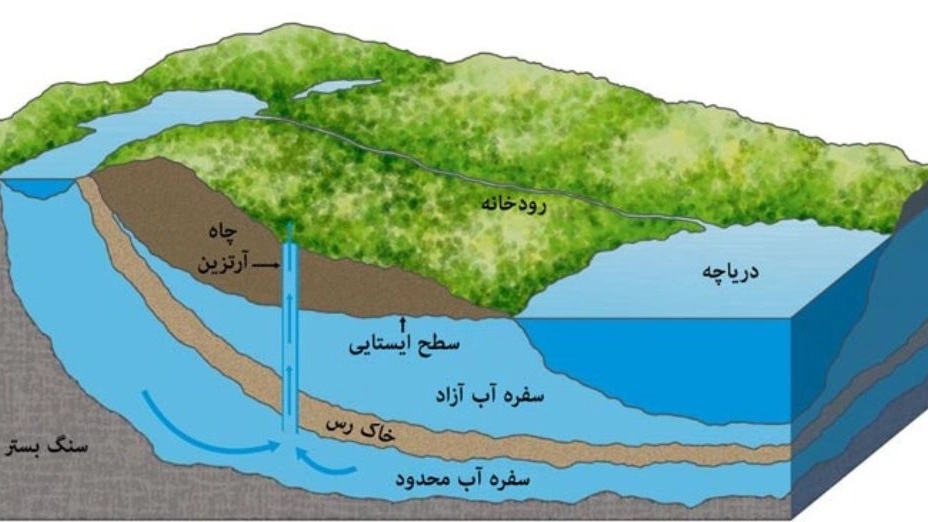
type of aquifer: In general, existing aquifers can be divided into two types of aquifers in porous (alluvial) environments and aquifers in hard formations. The first part is the most important and the main one. It forms the most constituent part of the existing aquifers in such a way that the maximum consumption of underground water, including drinking, industry and agriculture, is provided from these sources.
< b>Permeability or permeability: Some alluviums are more permeable than others, which means that they are more watery and have more drainage capacity per unit area compared to others. For example, sands and permeable alluviums and clays and silts are considered low permeable and impermeable alluviums. Therefore, when drilling is done in permeable structures, drainage is more than when drilling is done in less permeable structures.
Depth of contact with bedrock and thickness of alluvium: In an alluvial aquifer, alluvial sediments such as gravel, sand, silt, clay, etc. are placed on a solid and dense rock layer, and the aquifer only It is formed on top of this rock. The bedrock acts as an impermeable layer that underground water cannot pass through, and the thicker the watery alluvium in the drilling site, the higher the water level. Now, if we can map the depth and placement of the floor stone. We can identify the place that has the deepest bedrock (thickest alluvial layer) and suggest drilling at that point. In addition to the higher water level, this area is less affected by the drop in water level and the decrease of water level.
How are the traveat areas explored in a alluvium?
Geoelectrical studies can identify which area has coarser and more permeable alluviums (higher drainage) than other areas and thus determine the best location for drilling. Coarse-grained alluviums have a higher specific electrical resistance. compared to fine-grained alluviums, and consequently, a geophysicist can comment by measuring the specific resistance, which area of an aquifer the sediments in the watery part (below the reservoir surface) are more coarse-grained.
How are areas with the highest thickness of alluvium (the highest depth of collision on the floor) explored?
As mentioned, the areas that have the greatest thickness of alluvium and so-called hit the bedrock later during the drilling, have more favorable conditions in terms of the amount of water and are much more favorable for the exploration of underground water resources.
Deep Kavan Continental Plateau Company has modern geophysical equipment and an experienced team of earth science and geophysics experts in the field of underground water resource exploration.